Biology
 Chemistry
 Computer
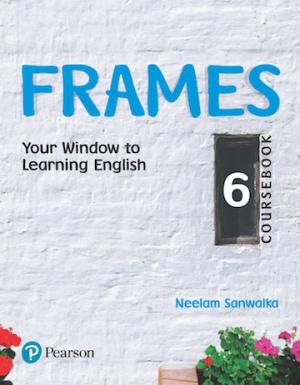
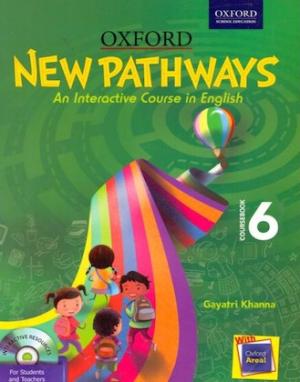
 English
 Geography
 Hindi
Hindi
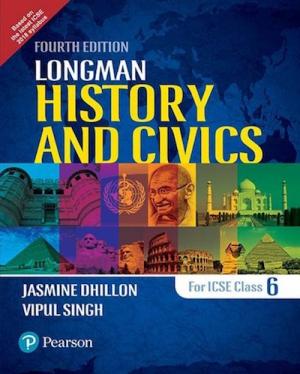
 History & Civics
 Physics
 Science
Displaying 5 out
of 22
questions & answers.
Cardinal directions: the four main directions, which are North, South, East and West.
Conventional symbols: common signs and symbols that are internationally accepted and used in maps.
Grid: a network formed by the criss-crossing of vertical and horizontal line map or globe to locate a place.
Intermediate directions: the directions in between the cardinal directions, i.e. north-east north-west, south-east and south-west.
Legend: also known as the key contains the list of conventional signs and symbols used in a map and their explanations.
Meridians of longitude: imaginary lines drawn vertically from the North Pole to the South Pole.
North Line: a line with an arrow and the letter N printed above it, at the upper right hand corner of a map to point towards the geographical north.
Parallels of latitude: imaginary circular lines drawn horizontally between the two poles and parallel to each other.
Scale: the ratio between the distance on a map and the actual distance on the ground.
Title: heading of the map that says what kind of information is given in it.
Q1.
Choose the correct option.
- The title of a map tells us ______________.
- who prepared the map
- the scale of the map
- the kind of information provided in the map
- the conventional symbol used in the map
- A mountain is shown on the map by _______________.
- a triangle pointing upward
- a triangle pointing downward
- 'M'
- 'Mt.'
- Meridians of longitude are __________________.
- vertical
- run in east-west direction
- are parallel to each other
- meet at the poles
- Parallels of latitude are _________________.
- horizontal
- run in north-south direction
- are parallel to each other
- meet at the poles
S A
M P L E
S
A M P L E
www.bigslate.com
Answer:
S A M P L E
- (c) the kind of information provided in the map
- (a) a triangle pointing upward
- (d) meet at the poles
- (c) are parallel to each other
Q2.
Fill in the blanks.
- North-east and north-west are called __________________ directions.
- A scale that says 1 cm = 500 km is called a _____________________.
- The legend is also called the ____________________.
- ___________________ is the latitude which is exactly midway between the two poles.
- The __________________ system helps us to locate any place on Earth.
S A
M P L E
S
A M P L E
www.bigslate.com
Answer:
S A M P L E
- intermediate
- verbal
- key
- The Equator
- grid
Q3.
Mark the following statements and correct them.
- There are eight cardinal directions.
- There are three common ways of showing scale on a map.
- Parallels of latitude run in north-south direction.
S A
M P L E
S
A M P L E
www.bigslate.com
Answer:
S A M P L E
- There are four cardinal directions.
- Correct statement
- Parallels of latitude run in the east-west direction.
Q4.
Name the firve essential features of maps. Why are they called so?
S A
M P L E
S
A M P L E
www.bigslate.com
Answer:
S A M P L E
answer not shownQ5.
What would a map titled 'Europe: Physical' show?
S A
M P L E
S
A M P L E
www.bigslate.com
Answer:
S A M P L E
A map titled 'Europe:Physical' shows the major physical features of Europe like rivers, mountains, lakes, etc.